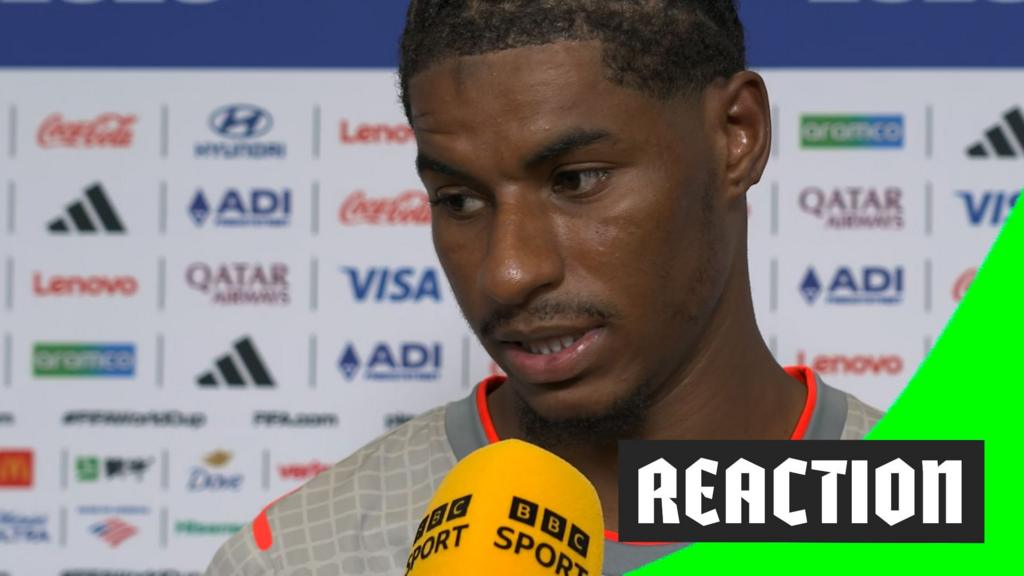
Marcus Rashford’s post-match assessment after England’s 2-0 win over Panama was refreshingly direct: the forward admitted he was not at his best level, even after earning his first World Cup start. For supporters, that honesty matters. It suggests a player who knows the standard he is expected to reach, and who understands that tournament football often turns on whether attacking players can quickly find rhythm.
England’s victory over Panama was important not only for the points, but also for the way it opened the door for squad rotation and individual evaluation. Rashford’s inclusion from the start gave Gareth Southgate another look at one of the side’s most explosive attacking options in a competitive setting. The Manchester United forward has long been valued for his pace, direct running and ability to stretch defences, qualities that can be decisive when opponents sit deep and try to limit space between the lines.
Rashford’s self-assessment and what it means
Rashford’s admission that he was below his best should not be read as a setback in isolation. In tournament football, especially at the World Cup, players often need a game or two to settle into the pace, pressure and tactical demands of the competition. A first start can be as much about finding timing and confidence as it is about end product.
From England’s perspective, the encouraging part is that Rashford believes he can improve. That is significant because Southgate’s squad has often relied on depth in attacking areas, and a sharper Rashford would add another dimension to a forward line that already carries expectations of producing against compact defences. If he can raise his level, England gain not just another starter, but a player capable of changing the tempo of a match with one run or one moment of acceleration.
Why England supporters will be watching closely
For England fans, Rashford’s comments are a reminder that the tournament is still in its early stages and that form can evolve quickly. A player who is honest about a mixed performance is often one who is mentally ready to respond. That matters in a World Cup, where momentum can shift from one match to the next and where attacking players are judged not only on goals, but on how effectively they create uncertainty for defenders.
There is also a broader tactical angle. England have options in wide and forward areas, and Rashford’s profile offers something different from more possession-focused attackers. If he sharpens his decision-making and final ball, he can become a more consistent threat in matches where England need to break down disciplined opposition. His own words suggest that is exactly the next step he is targeting.
In that sense, the story is less about disappointment and more about potential. Rashford has acknowledged he was not at his peak, but the fact he said he can improve is the key takeaway for England. If he does, Southgate’s side could become even more dangerous as the tournament develops.
Source note: This article was prepared using publicly available information from BBC Sport and expanded with editorial context.
Share this content: