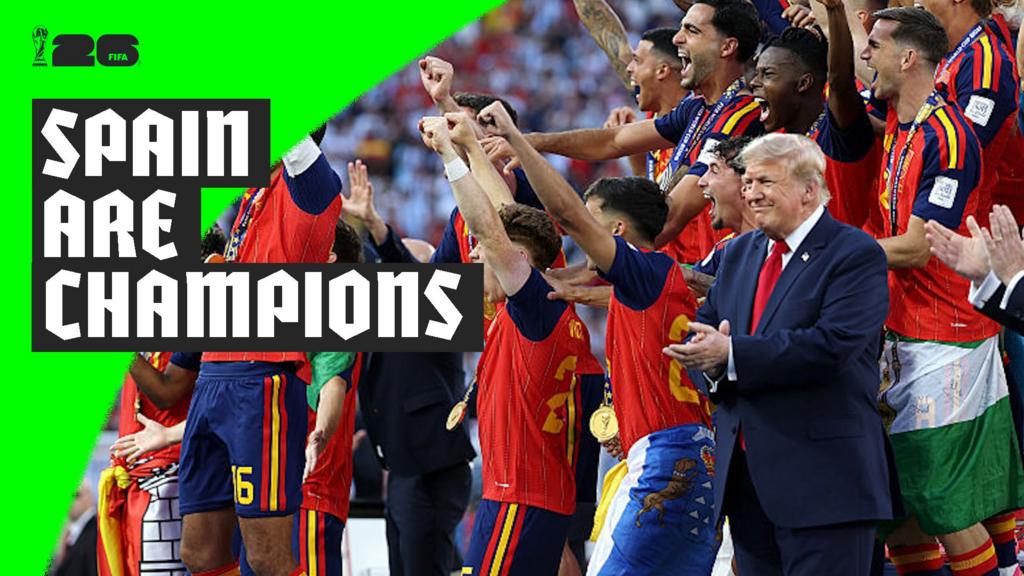
Spain’s 1-0 victory over Argentina in the 2026 World Cup final delivered the kind of night every national team dreams about: a trophy lift on the biggest stage in football. But the post-match image that will travel just as widely is not only the celebration itself, but the presence of US President Donald Trump, who lingered on stage as Spain received the trophy.
A final decided by the narrowest of margins
The result underlines how fine the line can be in a World Cup final. A one-goal margin in a match of this scale usually points to a contest shaped by concentration, defensive discipline and the ability to take the decisive moment when it arrives. For Spain, that was enough to secure the title against Argentina, a side with its own deep tournament pedigree and expectation of competing for the biggest prizes.
For supporters, the significance goes beyond the scoreline. Winning a World Cup is the defining achievement in international football, and doing so against Argentina adds even more weight to the occasion. It is the kind of result that becomes part of a nation’s football memory, remembered not only for the trophy but for the pressure, the opponent and the stage on which it happened.
Why the presentation became part of the story
The trophy ceremony is usually a tightly controlled moment, but Trump’s presence on stage gave the presentation an unusual backdrop. In football terms, the focus should always remain on the champions, yet the optics of the celebration matter because they shape how the moment is remembered and replayed around the world.
That is especially true at a World Cup, where the final is watched far beyond the two teams involved. The ceremony becomes part of the event’s global narrative, and any unexpected detail can quickly become as discussed as the football itself. In this case, Spain’s triumph is the central fact, but the stage presence added an extra layer of attention to the aftermath.
What it means for Spain and their supporters
For Spain, this is the ultimate validation of a successful tournament run. Lifting the trophy confirms they were the team that handled the biggest pressure moments best, and it gives supporters a landmark achievement to celebrate for years to come. Finals are often remembered for the smallest details, but the lasting headline is simple: Spain are world champions after beating Argentina 1-0.
For Argentina, the defeat will sting because finals are so rarely available and so hard to reach. A narrow loss suggests they were competitive throughout, but at this level the margin for error is minimal. That is the reality of World Cup football: one goal can separate glory from disappointment.
From a broader football perspective, the result reinforces the idea that tournament football rewards resilience as much as flair. Spain found the decisive edge when it mattered most, and that is what will define this story long after the ceremony details fade.
Source note: This article was prepared using publicly available information from BBC Sport and expanded with editorial context.
Share this content: