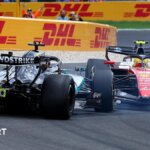
Kimi Antonelli’s Belgian Grand Prix victory has added another talking point to a Formula 1 season already shaped by fine margins, strategy calls and the kind of reliability concerns that can alter a championship narrative in an instant. In BBC coverage, commentator Harry Benjamin was joined by Sam Bird and Rebecca Clancy to assess the significance of the result and the wider title-race picture.
For Mercedes, the conversation is not just about one win. It is about whether the team has had the consistency to turn competitive pace into a sustained championship challenge. Reliability issues are often the hidden factor in modern Formula 1: they do not always dominate the headlines after a race, but over a season they can decide whether a team is celebrating a title or reflecting on what might have been.
Why Antonelli’s win matters
Antonelli’s Belgian Grand Prix success is important because race wins in Formula 1 are rarely isolated events. They usually reflect a combination of speed, execution and resilience under pressure. When a young driver delivers a result of that scale, it naturally sharpens attention on both the individual and the team structure around him.
For supporters, that means the result is more than a single Sunday highlight. It raises expectations, fuels belief and invites scrutiny. If Mercedes can produce a car capable of winning, the obvious question becomes whether the team can do it often enough to stay in the title conversation. That is where reliability becomes central. A fast car that cannot be trusted over a full race distance, or across a season, leaves points on the table and forces drivers into damage limitation rather than title pursuit.
Mercedes and the title-race equation
The BBC discussion framed the issue in a broader championship context, suggesting that without Mercedes’ reliability problems the title race would look very different. That is a significant point because Formula 1 championships are often decided not only by outright performance but by the accumulation of small setbacks: retirements, mechanical concerns, compromised race weekends and the lost momentum that follows.
From a tactical perspective, reliability also affects how teams race. It influences engine management, risk appetite, pit-wall decisions and how aggressively a driver can attack in key phases of a Grand Prix. When reliability is uncertain, every strategic choice becomes more conservative, and that can be costly against rivals who are able to push harder.
The BBC’s Chequered Flag podcast discussion suggests Mercedes remain a central part of the title conversation, but not necessarily on their own terms. For fans, that creates a familiar Formula 1 tension: the sense that the pace is there, but the championship picture depends on whether the team can convert potential into dependable results.
Antonelli’s win therefore matters on two levels. It is a statement result for the driver, and it is also a reminder that Mercedes still has the ingredients to influence the season. The unanswered question is whether reliability will allow that influence to become something bigger.
Source note: This article was prepared using publicly available information from BBC Sport and expanded with editorial context.
Share this content: